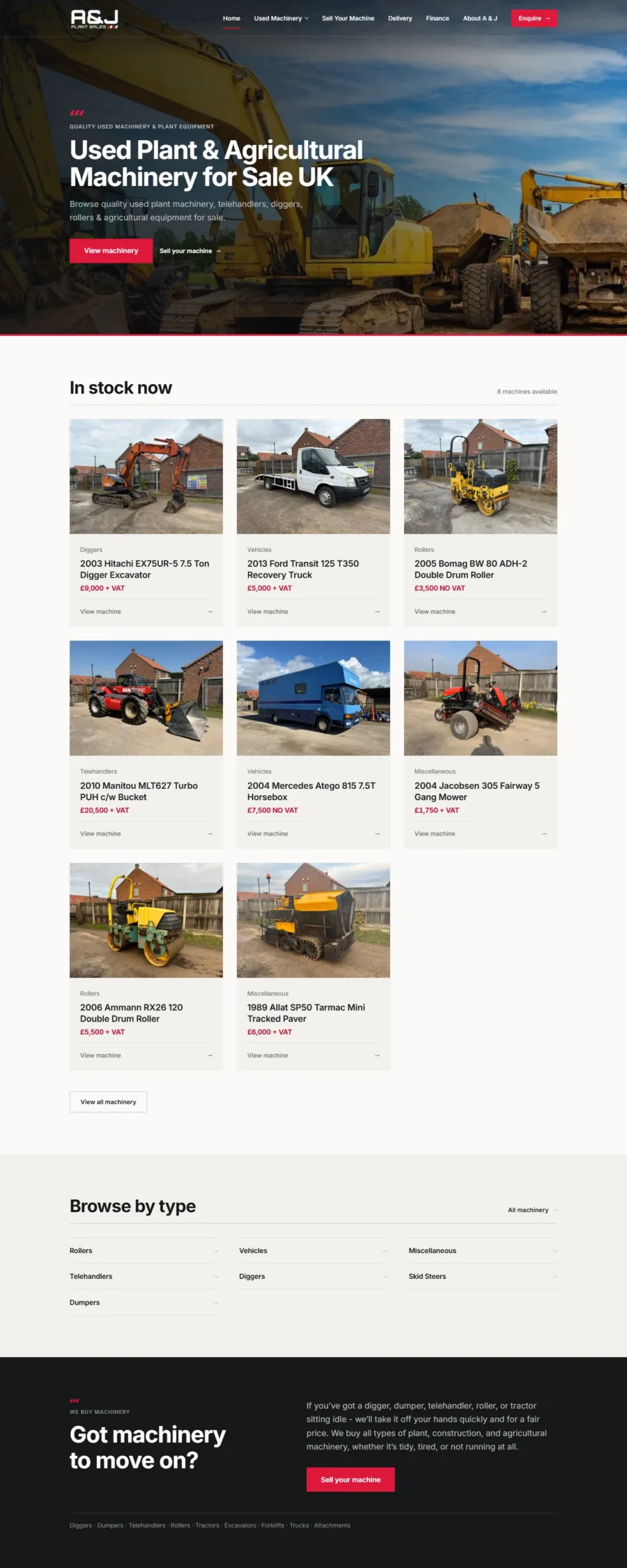
A & J Plant Sales
A filterable machinery listing with a page per machine and a sold archive, run entirely by the dealer.
Web design for dental practices
A dental website has two jobs at once: bring in new patients for the treatments that sustain the practice, and calm somebody who has been putting off a check-up for four years. Both while staying inside the GDC guidance.
The problem
Three audiences, one regulator, and a lot of anxiety.
Someone who has avoided a dentist for years is not comparing implant prices. They need to know they will not be lectured, what the first appointment involves, and that they can say they are anxious without it being a scene. A page written for them converts patients that no amount of clinical detail would.
Implants, orthodontics, clear aligners, cosmetic work. Weeks of reading, several practices compared, and cost is central. These need proper pages with real explanation and honest figures.
Whether you are taking NHS patients, whether there is a waiting list, what the band charges are, what private costs instead. Unanswered, this is the commonest reason someone gives up and rings elsewhere.
Dental advertising has to be legal, decent, honest and truthful, claims need backing with facts, language should be clear to patients, and you must not create unjustified expectations about results. Your GDC registration number belongs on the site. This shapes how the pages are written, not just what is on them.
What it needs
Fees, reassurance, and a straightforward way to register.
NHS band charges and private fees. From-prices for treatments that genuinely depend on assessment, with that made clear. Patients expect it and its absence reads as evasion.
What the first visit is like, how long it takes, what happens if they need work doing, and how to tell you they are nervous. One of the highest-converting pages a practice can have, and one of the rarest.
Whether you are open to new patients, NHS and private, separately and honestly, and exactly how to join. If there is a waiting list, say so; people respect it and stop wasting your reception's time.
Structure
Practices usually want the ten-page package, because the treatment pages carry the high-value work.
Whether you are taking patients, where you are, and how to register.
Registration, what the first appointment involves, and the reassurance for nervous patients.
A page each for the significant ones: implants, orthodontics, hygiene and cosmetic work, written in language a patient understands.
NHS bands and private fees, set out plainly.
Names, photographs, qualifications and GDC numbers. Required in spirit and reassuring in practice.
What to do, when you can see them, what it costs. Heavily searched and usually badly answered.
Parking, accessibility, opening hours.
Mistakes
It reads as a promise, which is precisely what the guidance warns against, and it tells the patient nothing about your practice. Photographs of your actual surgery and your actual team do far more.
"The best dental care in Yorkshire" is a claim you cannot back and the guidance asks you to back your claims. "Twelve years in the same practice, open Saturday mornings" is checkable and more persuasive.
It is the first thing patients look for. Leaving it out does not avoid the question, it just moves the enquiry to whoever answered it.
Work
A filterable machinery listing with a page per machine and a sold archive, run entirely by the dealer.
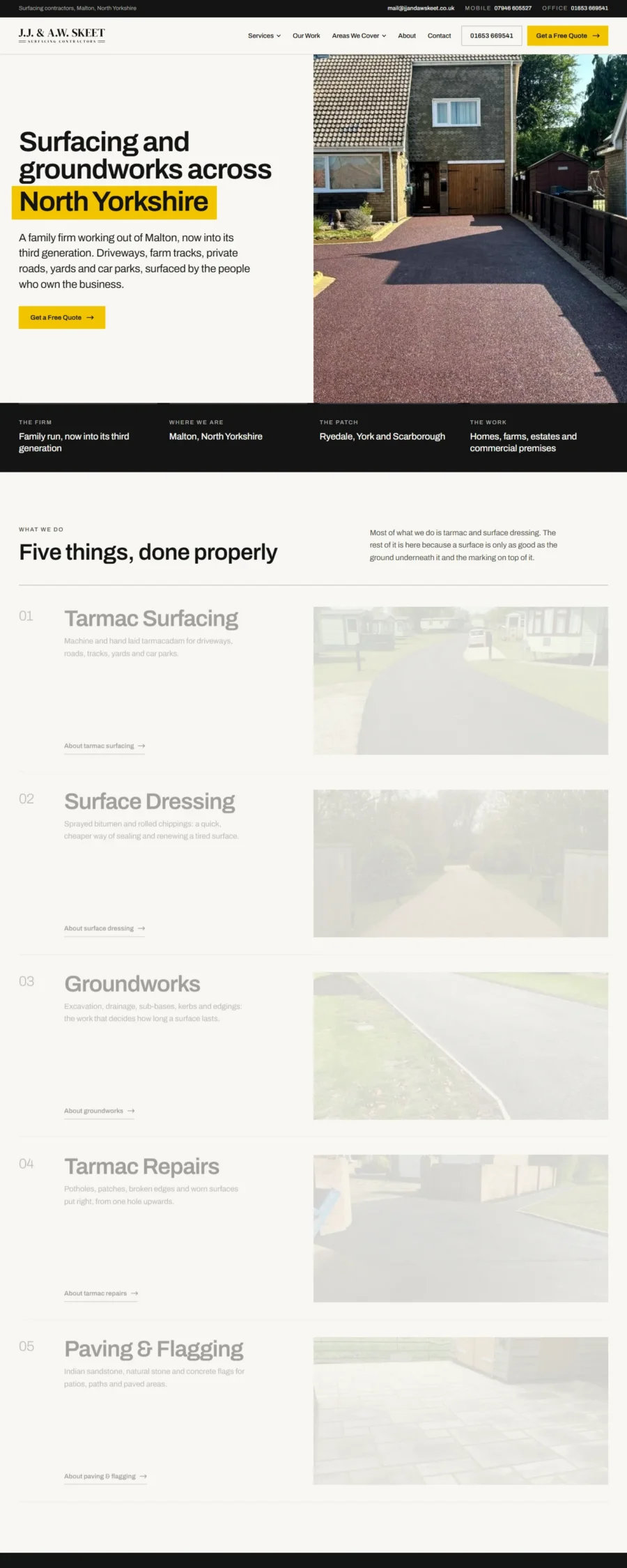
Surfacing and groundworks across Ryedale, York and Scarborough. Built to prove a family firm is exactly that.
Pricing
The same published prices as everyone else pays. No sector premium.
Up to 5 pages
£400
Recommended
Up to 10 pages
£800
Bespoke build
£1,200+
Need a page or two more than the package allows? We will quote for the extra pages before you commit to anything, so you know the full cost up front. See the full comparison.
FAQs
We write to the guidance: claims backed by facts, plain language, no unjustified expectations about results, registration details included, and your practice reviews and signs off every word. We know the rules well enough to write within them; we are not your compliance adviser and would not pretend to be.
With patient consent and presented carefully, they have a place, but they must not imply a new patient will get the same result, and treatment must be shown as conditional on assessment. It is worth getting your principal's view on each one rather than publishing a gallery.
Then say so prominently. It saves your reception a great many calls and patients would far rather read it than be told on the phone.
If you want that work, yes, with its own page. It is a considered, high-value purchase and patients research it thoroughly. What matters is explaining it properly and being straight about cost, not making claims about the outcome.
Advice
Most small business sites have too many pages saying too little. Here is the site most local businesses should have, page by page, and the five…
A failing website leaves no trace: the enquiries that did not happen never show up anywhere. Twenty minutes on your phone will tell you where you…
Quotes for the same website vary enormously. Here is what actually drives the price, and the four questions that tell you whether one is fair.
Tell us what the business does and what you need the site to do. You will get a straight answer on what it costs and how long it takes, not a discovery call.
or email hello@malnor.co.uk